Before we began identifying solutions to the problem, we conducted a 3 month discovery sprint to validate the client team's assumptions about the needed solution.
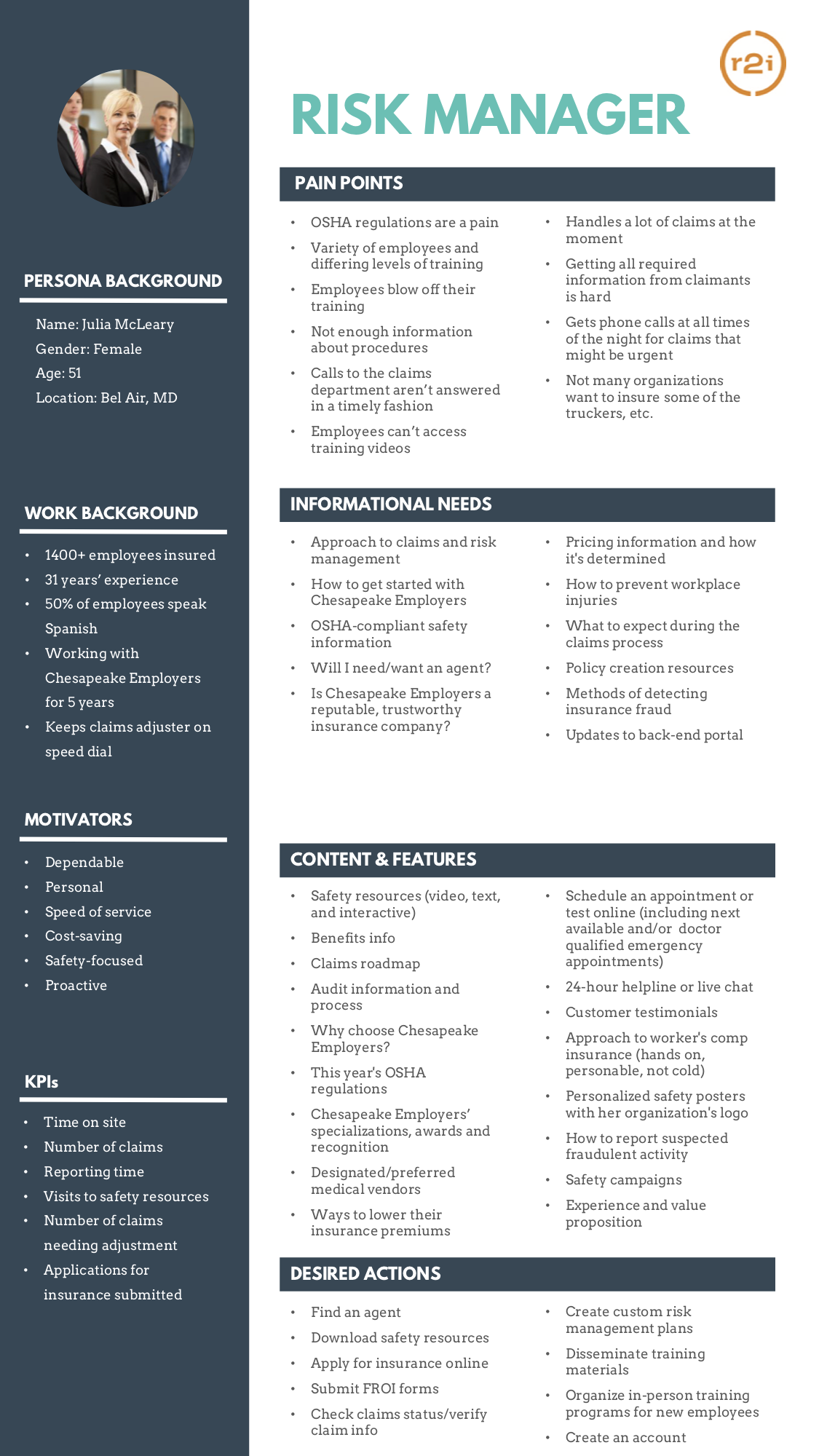
To inform our strategy, we conducted a wide range of both direct and indirect UX research, intended to gain a holistic view of the customer experience with Chesapeake Employers, including learning who their users are, understanding their current process and which parts of it could be modified/improved, and identifying the set of technologies that enable them to deliver experiences to their customers.
Our discovery research consisted of:
Stakeholder Interviews/Focus Groups
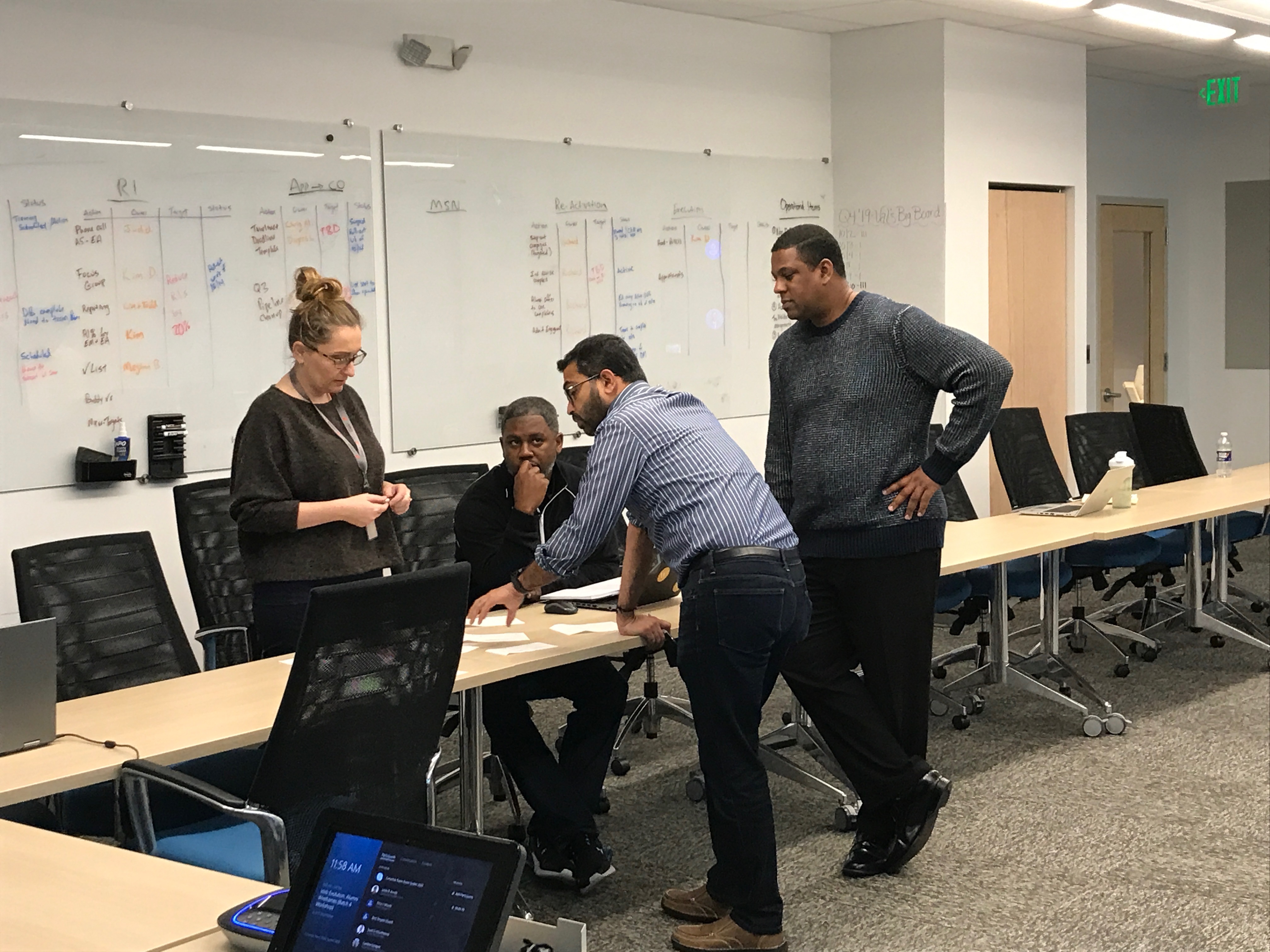
We conducted 2 full days of on-site interviews with the Chesapeake Employers team to better understand the business and the various teams' needs that might be accounted for within the redesign. The main client contacts selected their stakeholder team, making sure to include senior leadership and relevant parties from each business unit to identify current pain points, ideal-state vision, and necessary business requirements. Each interview included 2-3 people of complementary roles from the relevant as a focus group who had polled the rest of their team to understand pain points in their current workflows.
Heuristic Analysis
We conducted a UX audit of the existing site to identify alignment with [NNG's 10 Heuristics for User Interface Design](https://www.nngroup.com/articles/ten-usability-heuristics/ "Summary from NNG Website: "Jakob Nielsen's 10 general principles for interaction design. They are called "heuristics" because they are broad rules of thumb and not specific usability guidelines.""). Our analysis was primarily intended to inform preliminary usability recommendations, which were then further informed by additional UX research findings.
Analytics Review
We reviewed their existing website analytics to determine which content was driving users to the site, which content was keeping users on the site, and which content was driving users off site. We also sought to identify key user paths/flows through the site to simplify and increase visibility of those key flows. This review also helped us prioritize our key findings by overall visibility and impact to customers.
Competitive Analysis
Our client shared 3 competitors that they believed were strongest in the field, and wanted us to provide a formal analysis of those companies' websites. In delivering that analysis, we identified that 2 of the 3 competitors identified had similarly outdated website designs, so we expanded the audit to an informal list of 21 competitor/comparator websites to broaden our design inspiration, and collect feedback to guide the design team during concepting.
User Interviews
We conducted phone interviews with 8 users to learn more about how they currently use the site, identify any content needs not yet met, and uncover functionality recommendations. In these interviews, we were also able to validate findings from our secondary research, to ensure those recommendations would actually benefit users.
Through these interviews, we were able to identify major differences in how their government customers do business with Chesapeake Employers, even so much as to use a different name for the division within the company (IWIF).